

Introduction
Email server serve as the backbone of modern communication, enabling the exchange of electronic messages across the internet. They are complex systems designed to handle the storage, delivery, and management of email communications. Understanding how email servers work involves delving into the intricacies of their architecture, protocols, and security measures.
Basics of Email Server
Email servers are specialized computers or software applications that facilitate the processing and routing of email messages. They consist of multiple components, including the Mail Transfer Agent (MTA), Mail Delivery Agent (MDA), and Mail User Agent (MUA). The MTA is responsible for sending and receiving email messages, the MDA delivers the messages to the recipient’s mailbox, and the MUA is the user interface for accessing and managing emails.
Sending Emails
When a user composes and sends an email, the email client interacts with their outgoing email server using the SMTP protocol. The SMTP server processes the outgoing message, verifying the sender’s identity and performing various checks, such as ensuring the recipient’s address is valid. Once validated, the SMTP server establishes a connection with the recipient’s email server and transfers the message.
Receiving Emails
When an email is sent to a user, the sender’s server transmits it to the recipient’s email server using SMTP. The recipient’s email server receives the incoming message and checks for spam, viruses, or other security threats. If the message passes the checks, it is delivered to the recipient’s mailbox, where it awaits retrieval by the user through their email client using protocols like POP3 or IMAP.
Email Server Protocols
Email servers use various protocols to facilitate the exchange of messages. In addition to SMTP, which governs message transfer, protocols like POP3 and IMAP enable users to access and manage their emails. POP3 downloads emails to the user’s device, while IMAP allows them to view and manage emails directly on the server, ensuring synchronization across multiple devices.
Email Routing and Delivery
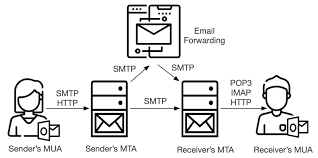
Email servers rely on DNS (Domain Name System) to route messages to the correct destination. When an email is sent, the sender’s email server queries DNS to determine the recipient’s email server’s IP address. The email is then routed through intermediate servers if necessary, based on the recipient’s domain, until it reaches the intended email server.
Spam Filtering and Security
Email servers employ advanced spam filtering techniques to detect and block unsolicited or malicious emails. They utilize techniques like content analysis, sender reputation checks, and blacklisting to identify spam messages and prevent them from reaching users’ inboxes. Additionally, email servers implement encryption protocols like TLS to secure the transmission of emails, protecting sensitive information from unauthorized access.
Conclusion
Email servers form the backbone of digital communication, enabling the seamless exchange of messages worldwide. By understanding the intricacies of how email servers work, we gain insights into the processes involved in sending, receiving, routing, and securing email communications. Email server technologies continue to evolve, incorporating advancements in security, efficiency, and scalability to meet the growing demands of modern communication.